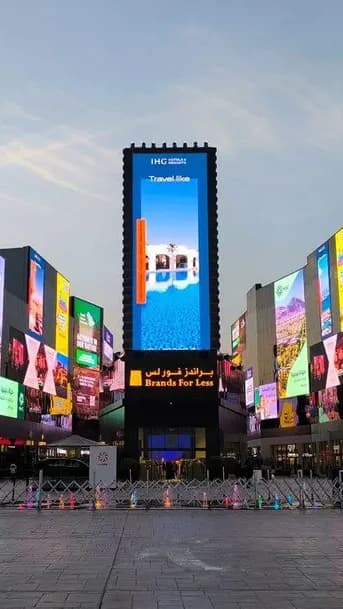
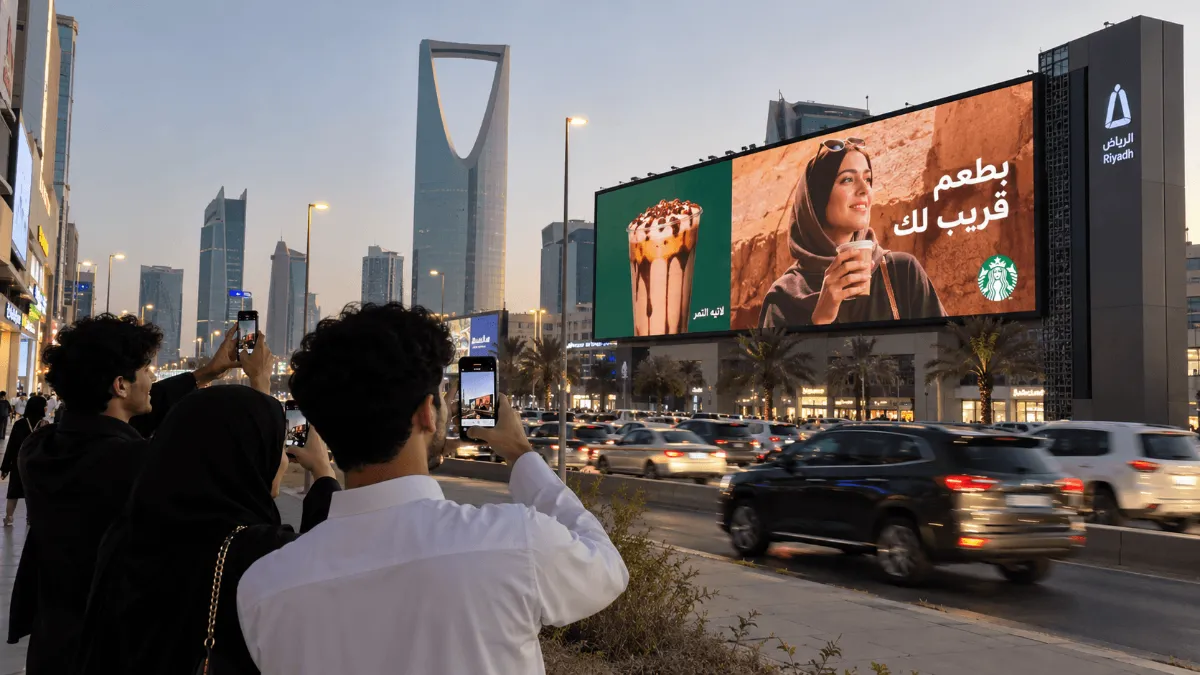
A billboard can reach thousands of people on the street. The right creative can travel much further when someone takes out their phone.
This is especially relevant when targeting Gen Z in Saudi Arabia. This generation has grown up with smartphones, social platforms and short-form video. Physical experiences regularly become digital content within seconds.
For brands, this changes how outdoor advertising can be planned. A campaign can be designed for people who see it on the road and for the larger audience that may discover it later through TikTok, Snapchat, Instagram or other digital platforms.
So, what makes someone stop, take a photo and share an outdoor ad?
Visual Impact Comes First
People need a reason to look before they have a reason to share.
Large-scale creative, unusual installations, striking colours and unexpected visual ideas can make an advertisement stand out from its surroundings.
The location also matters. A creative concept should work with the environment rather than simply occupy the available advertising space.
This could include:
- 3D digital content on large LED screens
- Creative billboard extensions
- Installations people can interact with
- Large-scale product replicas
- Designs that use the surrounding architecture
- Displays that change based on time or conditions
The goal is to create something people notice naturally.
If the idea can be understood within a few seconds, it also has a better chance of working when photographed or filmed for social media.
Give People Something Worth Filming
A standard product image may communicate a message effectively, but it does not automatically give someone a reason to record it.
Movement and transformation can change that.
Digital screens give brands more flexibility here. A creative can reveal a product, respond to its surroundings or use animation to build anticipation before delivering the main message.
The viewing experience becomes part of the content.
Someone might record a ten-second clip and upload it to Snapchat or TikTok. Their followers then see the campaign without being anywhere near the original media location.
This gives brands an opportunity to think beyond the physical audience when developing the creative.
Make the Campaign Relevant to Saudi Culture
Cultural relevance can make an advertising idea feel more connected to its audience.
Saudi Arabia has a young population and a rapidly changing entertainment, tourism, retail and lifestyle landscape. Brands can build campaigns around moments that already matter to people.
National celebrations, Ramadan, Eid, major sporting events, concerts and entertainment seasons can all provide useful context when appropriate for the brand.
Language matters too.
Arabic copy can create an immediate connection with local audiences. Some campaigns may use Arabic and English depending on the target market and location.
The important point is to make the message feel natural. Forced references to trends or local culture can quickly make a campaign feel less authentic.
Humour Can Encourage Sharing
Humour gives people a simple reason to send an advertisement to someone else.
A clever headline, familiar situation or unexpected visual can turn a commercial message into something entertaining.
Saudi brands can use local expressions and everyday experiences where they fit the campaign. The message should still be easy to understand for the intended audience.
There is also a practical benefit to keeping humorous copy short.
A person travelling past an advertisement has limited time to read it. A short line that delivers the joke quickly is easier to understand and easier to photograph.
Create a Photo Opportunity
Sometimes the advertisement itself can become a destination.
Experiential installations can encourage people to stand beside them, interact with them and create their own content.
Brands could use:
- Interactive displays
- Branded seating areas
- Mirrors and reflective installations
- Creative product displays
- Augmented reality experiences
- Temporary installations in busy public spaces
This works particularly well in locations where people already spend leisure time, such as shopping, entertainment and event districts.
The audience becomes part of the creative rather than simply viewing it.
Choose Locations That Support Social Sharing
A strong creative still needs the right setting.
Riyadh and Jeddah offer many environments where young audiences spend time, from shopping destinations and entertainment areas to major roads and event locations.
In Riyadh, campaigns can consider areas associated with dining, shopping, entertainment and major seasonal events. Jeddah offers opportunities around commercial districts, waterfront destinations and popular leisure areas.
The exact location should depend on the audience and campaign objective.
A fashion campaign, for example, may benefit from a different environment than a new automotive launch.
Keep Branding Visible in User-Generated Content
There is one potential problem when an outdoor campaign becomes popular online: people may remember the creative but forget which company created it.
Branding should remain visible without overwhelming the idea.
A logo, distinctive product, brand colour or short campaign line can help people identify the advertiser when they encounter a photo or video online.
This becomes particularly important when content is reposted.
The original caption may disappear as a video moves between accounts and platforms. The creative itself should still communicate who is behind
Design for the Street and the Smartphone
Shareable campaigns need to work in two environments.
First, the advertisement has to communicate effectively in its physical location. Then it needs to remain recognisable when viewed as a vertical video, photograph or social media post.
That means brands should consider how the creative will appear through a smartphone camera during the planning stage.
Is the headline readable?
Can the brand still be identified?
Does the idea make sense without additional explanation?
Would someone want to send it to a friend?
These questions can help brands create outdoor advertising that has a life beyond its original location.