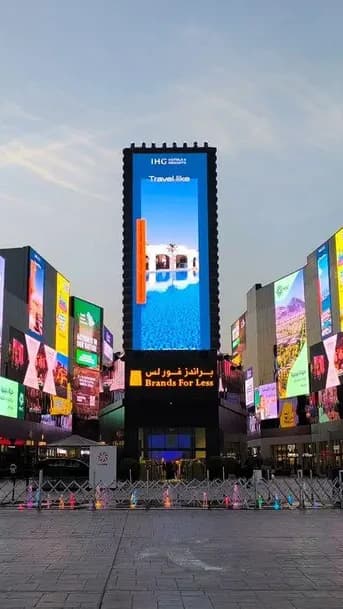
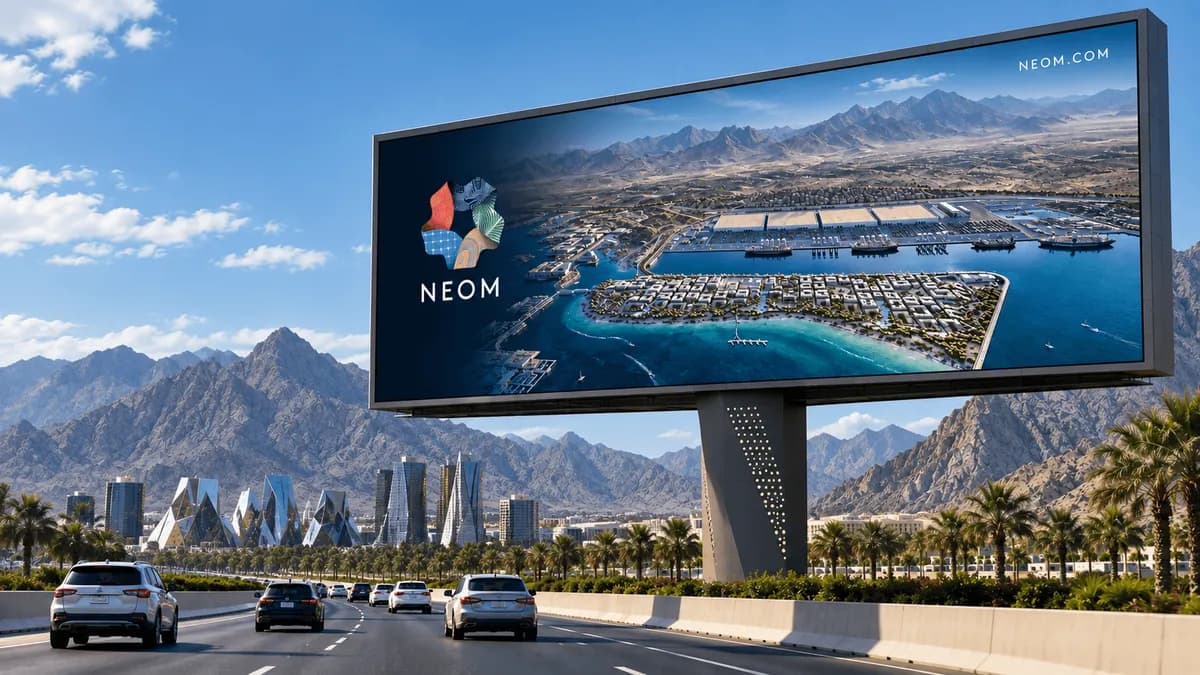
NEOM is one of Saudi Arabia’s most ambitious development projects. As its destinations and infrastructure continue to take shape, the project could also influence how brands approach advertising in the Kingdom.
The development covers several distinct regions and projects, including THE LINE, Oxagon, Trojena and Sindalah. Each has a different purpose, from urban living and industry to mountain tourism and luxury hospitality.
For advertisers, these new environments could create opportunities to reach residents, business travellers, tourists and investors in carefully planned locations.
The result could be a new approach to outdoor advertising in Saudi Arabia, with digital technology, location planning and design playing a central role.
Why NEOM Matters to Saudi Arabia’s Advertising Market
Saudi Arabia is investing heavily in tourism, entertainment, infrastructure and new destinations as part of Vision 2030.
NEOM sits within this wider transformation.
As more people live, work and travel within its destinations, brands will need ways to communicate with these audiences. Advertising can be placed in busy locations where lots of people travel, shop, stay, or attend events.
However, NEOM is still developing. The exact scale and types of future advertising inventory will depend on individual locations, planning decisions, regulations and media availability.
What is clear is that a digitally focused development creates interesting possibilities for how commercial messages could appear within the built environment.
Digital Screens Could Play a Major Role
NEOM has been positioned around advanced infrastructure and technology. This could make digital out-of-home media a natural fit for suitable commercial areas.
Instead of relying heavily on traditional static structures, future advertising environments could include high-quality digital displays integrated into buildings, transport areas and public spaces.
Potential formats could include:
- Large-format digital screens
- Digital street furniture
- Transport advertising
- Retail and hospitality screens
- Event and entertainment displays
- Interactive digital installations
Availability would depend on the design and advertising rules of each destination.
Smarter Scheduling Could Make Campaigns More Relevant
Digital screens give advertisers greater control over when creative appears.
A hospitality brand could run messaging during periods of high visitor activity. Restaurants could promote relevant offers around meal times. Event organisers could update information as an event approaches.
Campaigns could also use different creative throughout the day without replacing physical materials.
This flexibility would be particularly useful in destinations serving several audience groups.
THE LINE Could Create a Different Media Environment
Because THE LINE is designed around walking, public transport, and concentrated commercial areas, advertising there could be very different from traditional roadside billboards.
Advertisers would need to think carefully about the location and situation in which people see their ads and create advertising that fits each environment.
Tourism Could Open New Advertising Opportunities
NEOM is also being developed as a tourism destination.
Sindalah is focused on luxury island tourism, while Trojena is planned as a mountain destination for leisure, sport and major events.
These environments could attract audiences with very different interests.
Luxury brands may see opportunities around premium hospitality and retail locations. Airlines and travel companies could target visitors moving through arrival points. Sports brands could become relevant around active tourism and events.
Destination Media Could Become More Important
Advertising within tourism destinations needs to fit its surroundings.
Large numbers of unrelated advertising structures could work against the visual identity of a carefully designed destination. Media could instead be incorporated into architecture, visitor facilities and commercial spaces.
This creates an opportunity for brands to think beyond conventional campaign placement.
Creative quality, screen design, positioning and relevance to the location could become increasingly important.
Major Events Could Drive Short-Term Campaign Demand
NEOM has already been associated with sports, tourism and entertainment initiatives.
As its destinations develop, events could create periods of concentrated audience activity. These moments may offer opportunities for sponsors, tourism brands and event partners to communicate with visitors.
Digital media would make it easier to adapt campaigns around specific schedules.
An advertiser could promote an upcoming event in advance, provide relevant messaging during the event and change the creative once it finishes.
This approach could be useful for sporting events, conferences, festivals and destination launches.
Data Could Influence How Campaigns Are Planned
Modern out-of-home planning increasingly uses information about locations, audiences, movement and campaign performance.
A digitally connected destination could create opportunities for more informed media planning, subject to privacy requirements, regulation and available technology.
Advertisers could potentially plan campaigns according to factors such as:
- Location
- Time of day
- Audience movement
- Event schedules
- Visitor periods
- Transport activity
- Screen availability
The aim would be to place suitable creative in locations where it has a clear purpose.
Creative Standards Could Rise
NEOM’s visual identity and architecture could also influence the quality expected from advertisers.
A premium development needs advertising that works within its surroundings. Poorly designed creative can feel out of place in a carefully planned environment.
Brands may therefore need to pay greater attention to typography, motion, image quality and the amount of information displayed.
For digital screens, short copy and strong visual hierarchy can help people understand a message quickly.
Technology Should Support the Idea
Advanced screens can create impressive campaigns, but technology alone does not make an advert effective.
A successful execution still needs a clear message.
Interactive features, motion, dynamic content and other digital capabilities should have a reason to be there. The creative needs to remain understandable for the audience seeing it.